
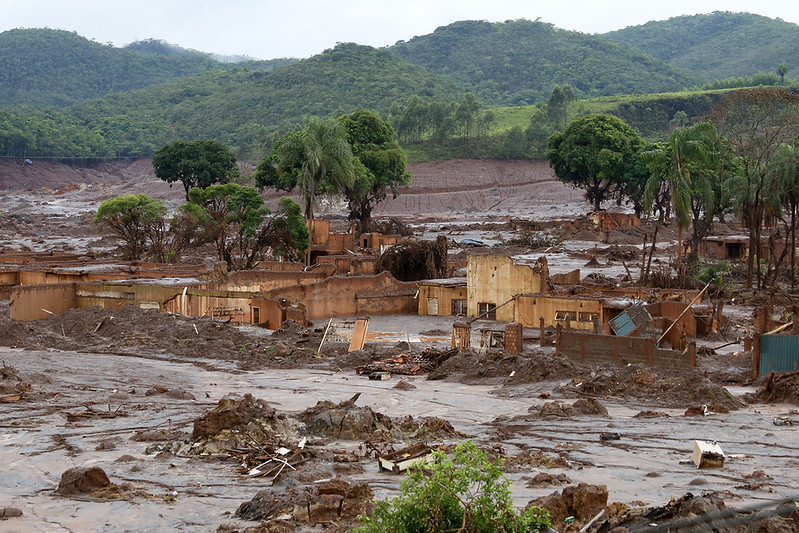
The decision published on November 14, 2025, by the High Court of Justice of England and Wales in the case of Municipality of Mariana v. BHP Group marks a turning point in the legal treatment of environmental disasters that have effects beyond national borders and involve multinational corporations with complex corporate structures. After years of procedural debates, the English court rejected objections of admissibility raised by BHP and concluded that the company can be held liable under Brazilian law for damages resulting from the Fundão Dam collapse in 2015.
The decision stands out for three main reasons. First, it represents a rare example of a foreign court broadly and directly applying Brazilian environmental, civil, and corporate law to determine the liability of a multinational company for damages occurring in Brazilian territory. Second, it involves a careful application of private international law to define the governing law for non-contractual obligations and the rules of prescription. Third, it comes at a time of growing tension between national jurisdictions, as evidenced by the recent ADPF No. 1178, in which the Brazilian Supreme Court reacted to an English measure that sought to restrict the legal actions of Brazilian public entities abroad.
The convergence of these elements reinforces that the Mariana case has become a global legal laboratory for issues such as sovereignty, international judicial cooperation, parallel transnational litigation, and the civil liability of business conglomerates.
In November 2015, the collapse of the Fundão Dam, operated by Samarco—a joint venture equally controlled by Vale and BHP Brasil—released millions of cubic meters of tailings that destroyed local communities and profoundly affected the Rio Doce basin all the way to the sea. The event, widely recognized as the largest environmental disaster in Brazil's history, prompted multiple domestic lawsuits and, subsequently, a massive class action lawsuit filed in the United Kingdom, based primarily on Brazilian environmental civil liability and BHP's shareholding.
The High Court extensively examined technical studies, expert opinions, and Brazilian and foreign reports to determine the causes of the collapse. The conclusion was categorically: the collapse was predictable and preventable. The immediate cause of the failure was the liquefaction of saturated sand tailings, induced by the lateral extrusion of slimes, which compromised the dam's structural confinement. However, this immediate cause was the consequence of a series of operational, technical, and managerial failures that had accumulated over the years.
The English High Court's judgment involved complex issues of private international law, which were essential to determine the governing law of the non-contractual obligations in dispute. As this was a lawsuit filed in the United Kingdom by Brazilian plaintiffs against a multinational corporation with a dual listing structure and transnational operations, it was necessary to establish the lex causae, that is, the legal system applicable to civil liability claims arising from the dam collapse.
From the outset, the parties agreed that Brazilian law would be the substantive law applicable to non-contractual obligations, making it clear that all substantive elements of civil liability — objective or subjective — should be analyzed in light of Brazilian law. This convergence, described by the Court as common ground, covered all claims, except for residual situations related to agency and corporate attribution, in which English or Australian rules could, in theory, play an incidental role.
Despite this consensus on substantive law, the Court had to examine the applicability of the Rome II Regulation (EC Regulation 864/2007), a European instrument governing the law applicable to non-contractual obligations, which remains relevant in the United Kingdom for similar transactional situations, even in the post-Brexit context.
The central point of controversy concerned whether the rules on limitation and prescription should be governed by Brazilian law (applicable to the merits) or English law (applicable to the judicial procedure). To resolve this issue, the Court referred to Article 15(h) of the Rome II Regulation, which provides that the law applicable to the non-contractual obligation also governs "the manner in which the obligation may be extinguished and the rules on prescription and limitation." Thus, it was established that Brazilian rules on limitation and prescription, including the commencement, interruption, and suspension of time limits, would be fully applicable to the claims brought.
Determining the law applicable to the merits and to the statute of limitations required the Court to draw a strict distinction between substantive rules and procedural rules, a distinction that plays a central role in contemporary private international law. On this point, the High Court was particularly emphatic in pointing out that attempting to transplant foreign procedural rules—such as the service requirements set forth in the Brazilian Code of Civil Procedure—would not only be incompatible with the logic of the forum, but also contrary to traditional common law principles on jurisdiction and the administration of justice. The application of Brazilian procedural rules to a proceeding in progress in the United Kingdom would violate what Anglo-Saxon literature calls public law taboo: the rule according to which English courts do not directly apply public or procedural law rules of another State, precisely because such rules are understood as an extension of foreign sovereignty and foreign jurisdictional organization.
For this reason, valid service of process, an act that invests the court with jurisdiction and initiates the procedural relationship, is unequivocally subject to lex fori and cannot be governed by foreign law. In contrast, Brazilian rules on the statute of limitations — including Articles 189, 202, and 206 of the Civil Code — were correctly classified as substantive rules, applicable to the case by virtue of Article 15(h) of the Rome II Regulation, which attributes to the law governing non-contractual obligations the entire regulation of the statute of limitations regime, comprising the commencement, suspension, and interruption of time limits.
On the merits, the central basis accepted by the English court was the strict environmental civil liability provided for in Article 14, paragraph 1, of Law 6,938/1981. This provision establishes that the polluter, broadly understood as the person who causes environmental damage directly or indirectly, must fully repair the damage regardless of the existence of fault. Brazilian law adopts the Theory of Integral Risk, which prevents polluters from invoking exclusions such as force majeure, unforeseeable circumstances, or third-party acts.
Based on this regime, the English court concluded that BHP perfectly fit the definition of an indirect polluter. The company exercised operational and strategic control over Samarco, obtained significant economic benefits, and assumed specific responsibilities related to the assessment and management of dam risks. This set of elements allowed the Court to affirm that BHP was jointly and severally liable for the damages resulting from the collapse.
Even if the environmental regime had not been applied, the English decision emphasized that BHP would also be liable under Articles 186 and 927 of the Civil Code, which govern subjective liability for fault. The High Court identified clear evidence of negligence, recklessness, and incompetence on the part of the company in allowing the dam to be operated outside safety limits, disregarding technical recommendations from experts, and failing to take essential preventive measures, such as liquefaction studies and remediation actions.
The Court concluded that BHP had a specific legal duty to act, derived from its control over Samarco and its active participation in risk management. Thus, its omission constituted an unlawful act, and the causal link between this conduct and the disaster was considered direct and immediate, in light of Article 403 of the Civil Code. Thus, even if strict environmental liability were ruled out, BHP would be convicted on the basis of traditional subjective liability.
The plaintiffs also sought to hold BHP liable based on Articles 116 and 117 of the Brazilian Corporations Law, which deal with the duties of the controlling shareholder and prohibit abuse of power. Although the Court recognized that Vale and BHP exercised joint control over Samarco, it understood that these legal provisions do not confer rights directly enforceable by third parties harmed by the company's actions. According to the interpretation adopted, the duties of the controlling shareholder are mainly aimed at protecting the company itself and minority shareholders, and do not establish a regime of autonomous civil liability towards victims outside the corporate structure. Thus, the action based on the Brazilian Corporations Law was rejected, not because there was no control, but because Brazilian law does not allow third parties to sue the controlling shareholder directly based on these provisions.
The English decision was handed down in an environment already strained by conflicts of jurisdiction, catalyzed by ADPF No. 1178, decided monocratically by Minister Flávio Dino on August 18, 2025. In this precedent, the minister faced a provisional measure from the High Court itself which, although formally addressed to IBRAM, produced effects typical of an anti-suit injunction: it was a foreign court order that sought to prevent the entity from proceeding with actions before the Federal Supreme Court related to the same litigation.
In response, Flávio Dino declared the English decision "ineffective" in the national territory, invoking constitutional grounds and Article 17 of the LINDB, and ordered states and municipalities to refrain from filing new lawsuits against IBRAM in foreign courts. In practice, the Brazilian decision operated as a kind of "anti-anti-suit injunction," a typical feature of jurisdiction disputes in common law systems, but here reproduced in a form adapted to the Brazilian institutional context and without express normative provision.
The repercussions of the case were immediate and polarized academic and jurisprudential debates. On the one hand, it is understood that the decision restored an essential core of jurisdictional sovereignty, reaffirming that foreign orders cannot interfere in internal proceedings without prior approval by the STJ, the body competent to give effect to international decisions. On the other hand, however, the Supreme Court exceeded the objective limits of the ADPF: by attributing material validity to the English order—without a request for ratification and without the proper recognition procedure—it acted extra petita and unduly interfered in matters of private international law, which fall within the functional jurisdiction of the STJ. The decision took on political and institutional contours, focused more on defending the Supreme Court's own sphere of action than on a technical examination of the procedural consequences of the English measure.
This episode places Brazil at the center of a global discussion on the capacity — and limits — of national courts to respond to parallel litigation developing in multiple jurisdictions. The simple fact that Brazilian municipalities and victims have resorted to English courts highlights a contemporary reality: in cases of transnational corporate damage, the search for alternative jurisdictions becomes a legitimate mechanism for accessing judicial systems perceived as more responsive, efficient, or independent. The existence of multiple jurisdictional connections, widely recognized by modern private international law, dispels the idea of exclusive monopolization of the forum of the place of damage and reinforces the need for instruments of international judicial coordination.
The Mariana case also reignites the debate on forum non conveniens, a mechanism widely accepted in common law countries that allows the court to decline jurisdiction when another forum is more appropriate to judge the dispute. Brazil, on the other hand, does not adopt this institution; the Code of Civil Procedure, by allowing the coexistence of domestic and foreign actions (art. 24), opts for a model of plurality of jurisdictions. Even so, the jurisprudence of the STJ shows indirect similarities with the logic of forum non conveniens, especially in cases involving forum selection clauses or evidence of forum shopping.
Another indispensable element for comprising ADPF No. 1178 is the principle of effectiveness, a structuring criterion of the Brazilian tradition of private international law. For a foreign decision to have effect in Brazil, it is necessary to demonstrate concrete utility, legitimacy of the parties, and respect for national sovereignty. Flávio Dino's decision, in declaring the English order ineffective, implicitly reinforces that foreign judicial acts cannot impose procedural constraints in Brazil without going through the recognition procedure, thus preserving the integrity of domestic jurisdiction.
Together, the interaction between the English decision and ADPF No. 1178 reveals that transnational environmental disputes challenge the traditional arrangements of private international law and require more sophisticated solutions, both at the legislative and jurisprudential levels. The coexistence of proceedings in Brazil and the United Kingdom highlights a scenario in which sovereignty, international legal cooperation, and access to justice are intertwined, challenging the Brazilian legal system to develop responses that reconcile order and openness, autonomy and dialogue between jurisdictions.
In summary, the Mariana case became a testing ground for new jurisdictional arrangements, testing the limits of corporate liability, contemporary private international law, and the very role of states in the global governance of socio-environmental risks. The decision published by the English High Court in the case represents a milestone in the consolidation of private international law focused on the management of complex transnational disputes.
By applying Brazilian substantive law with methodological rigor and interpretative precision, while safeguarding the autonomy and consistency of the English procedural system itself, the Court affirms a sophisticated model of jurisdictional coordination, capable of balancing, in a technically consistent manner, the tension between multiple jurisdictions, the circulation of decisions, and civil liability in contexts of massive damage that transcend state borders.
• What changed
On 14 November 2025, the High Court of Justice of England and Wales (TCC) issued judgment in Município de Mariana v BHP Group ([2025] EWHC 3001 (TCC)), holding that BHP’s UK/Australian parent companies can be liable for the Fundão dam collapse—applying Brazilian substantive law to determine liability for harm that occurred in Brazil. The Court rejected key admissibility/defence objections and treated Brazilian limitation/prescription rules as applicable through Rome II, Article 15(h) (prescription/limitation governed by the law applicable to the non-contractual obligation).
• Why it matters (not business as usual)
This is not a routine “foreign forum hearing a foreign tort” case. It is a template for transnational mass-tort environmental litigation where:
• a foreign court applies the host-state’s environmental strict-liability regime to a multinational parent structure;
• private international law rules are used to import the host-state limitation regime while preserving lex fori procedure; and
• parallel proceedings trigger jurisdictional conflict dynamics (including anti-suit / anti-anti-suit style responses).
• Executive impact
For boards, GC, ESG, and risk teams, the Mariana litigation signals three immediate governance shifts:
1. Parent-level exposure: courts may scrutinize “group control” and “risk governance” to reach parent companies even where the operating entity is local.
2. Choice-of-law hardening: limitation/prescription can follow the law of the place of damage (via Rome II logic), reducing the value of procedural defencesanchored only in forum law.
3. Parallel-litigation risk: corporate strategies must anticipate multi-forum proceedings, conflicting interim measures, and sovereignty-based pushback in the home state of harm.
• Where to go deep
• How the English court operationalized Brazilian strict environmental liability (polluter concept / indirect polluter logic) and still mapped an alternative negligence pathway under Brazilian civil code concepts (as reflected in public summaries).
• Rome II Article 15(h) and the substantive/procedural boundary: prescription/limitation imported; service/procedure remain lex fori.
• Corporate-law limits: the Court’s rejection of a standalone Brazilian corporate-law route (controlling shareholder duties) is as important as its acceptance of environmental/civil liability theories.
• Interaction with Brazilian institutional responses (ADPF 1178) and the broader coordination problem in transnational mass harm.
• Next steps
• Conduct a transnational litigation readiness review for environmental and human-rights risks (evidence preservation, group structure mapping, governance minutes, technical risk registers).
• Stress-test controls for “parent company involvement” indicators: approval chains, operational directives, shared services, risk committees, and crisis-response decision logs.

This section gives quick answers to the most common questions about this insight. What changed, why it matters, and the practical next steps. If your situation needs tailored advice, contact the RNA Law team.
Q: What changed, and why is this not “business as usual”?
A: A UK court issued a liability judgment in a mass harm case while applying Brazilian law as the governing substantive framework—demonstrating that “host-state environmental strict liability” can travel into a foreign forum when jurisdiction is established.
Q: What is the main legal-risk vector?
A: The key vector is group-level attribution: parent entities can face liability where courts find meaningful control, benefit, and risk governance failures—especially under strict environmental liability concepts that do not require proof of fault (and where fault theories can still run in the alternative).
Q: How did private international law shape the outcome?
A: Rome II’s approach makes the law governing the non-contractual obligation also govern prescription/limitation (Article 15(h)), while procedure (e.g., service) remains lex fori—a division the judgment emphasizes.
Q: Does the judgment “import Brazilian procedure” into the UK case?
A: No. The Court draws a hard line: Brazilian substantive rules govern liability and limitation, but English procedural rules govern how the case runs in the UK forum.
Q: What happened with the corporate-law theory (controlling shareholder duties)?
A: Public summaries indicate the Court rejected a route based on Brazilian corporate law while accepting environmental and civil-code bases for liability—signaling a preference for doctrines designed to protect victims/repair harm over shareholder-duty constructs aimed at internal corporate relationships.
Q: How does ADPF 1178 fit into the governance picture?
A: ADPF 1178 reflects Brazil’s institutional reaction to foreign measures perceived as constraining domestic action, reinforcing that recognition/effectiveness of foreign orders in Brazil is politically and legally contested—raising the stakes of parallel proceedings and jurisdictional friction.
Q: What should be done in the next 30–90 days?
A:
• Map group structures and decision pathways that could evidence parent-level oversight/control in high-risk operations.
• Audit existing remediation/settlement documentation to understand how waivers/releases may be treated claimant-by-claimant in foreign proceedings.
• Prepare a parallel-litigation protocol: forum strategy, evidence strategy, and recognition/enforcement posture across jurisdictions.


